German Shepherd Grooming: Manage Shedding, Keep the Coat
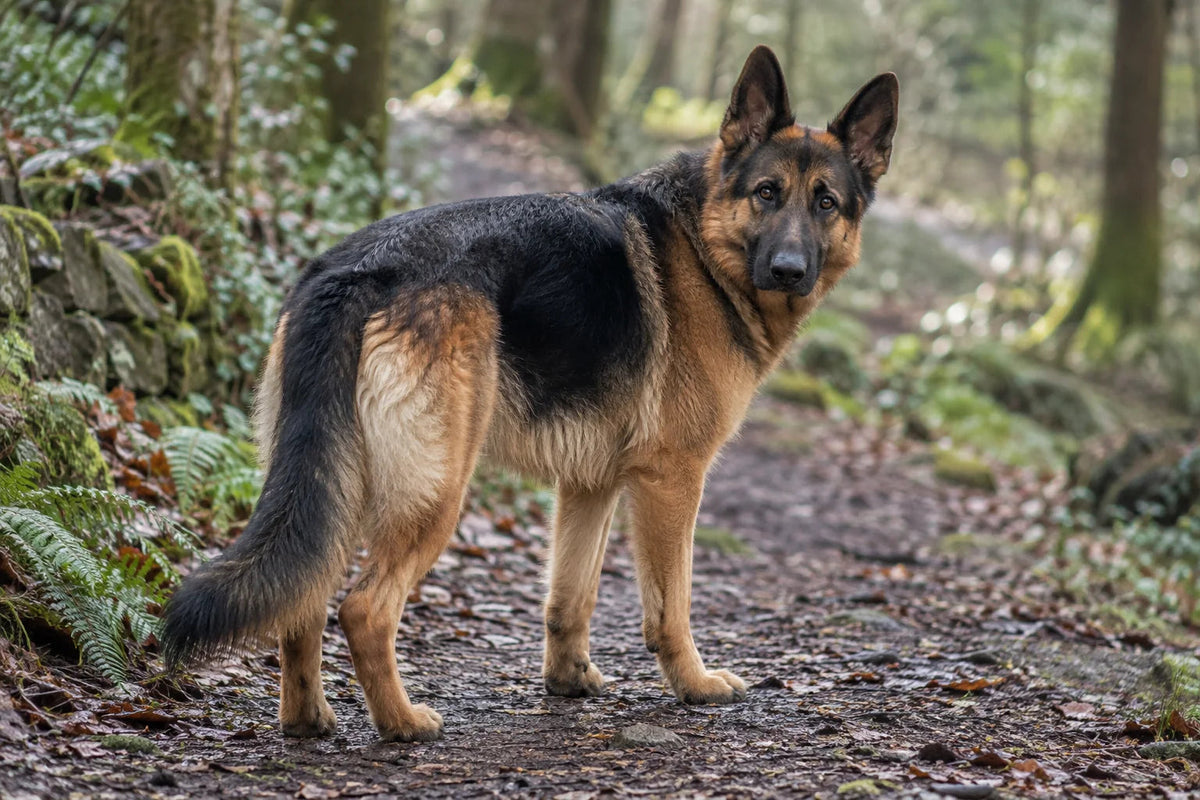
A German Shepherd can shed heavily while still having a healthy, well-kept coat. The challenge is to remove loose hair regularly without damaging the dense coat that remains. A shorter body haircut is not the answer.
The most useful home routine is methodical and brief: check the skin and coat, brush manageable sections, keep the dog dry after washing, and give the feet their own attention. Long-coated dogs need extra checking around the furnishings, but the goal is the same.
Do not routinely shave a German Shepherd. This is a double-coat maintenance guide. The relevant tools help with loose hair and nails, rather than giving the body a pet haircut.
Understand what is coming out
The AKC breed profile describes a close outer coat over softer undercoat, with more pronounced shedding at certain times of year. Hair released during brushing is not a signal to keep going until the entire soft layer has disappeared.
Part the hair with your fingers at the shoulder and hindquarters. Notice the difference between loose fluff, attached hair and a compacted patch that will not separate easily. Loose coat should come away gently; dense resistance needs assessment, not extra force.
Some dogs have longer hair behind the ears, on the backs of the legs and around the tail. Check these areas individually instead of assuming that a sweep down the back has groomed the whole dog.
Build a routine the dog can tolerate
A large dog does not have to stand through one long grooming session. Start on a stable non-slip floor and work where the dog is comfortable. You can do one side now and the other after a break.
- Look and feel for grit, burrs or areas that seem tender.
- Brush a small section with light pressure in the direction of growth.
- Clear hair from the tool so it continues to move freely.
- Move to the next section rather than repeatedly scraping the same patch.
- Use a gentler touch on the belly and thinly coated areas.
- Finish before the dog becomes restless or the skin looks irritated.
Increase the frequency of short sessions during a heavy shed. The AKC's German Shepherd grooming article draws on experienced breeders and supports adjusting brushing to the shed while avoiding body shaving. Its individual schedules are examples, not a requirement for every household dog.
Have a groomer demonstrate a suitable undercoat tool. A tool with cutting edges can remove or damage coat when used incorrectly. More pressure is not a substitute for choosing the right tool and understanding how it works.
Use a comb as a check, not a lever
For longer feathering, a VUNRO combination comb can help find small tangles after gentle brushing. Start with wider teeth and work only where they pass without pulling.
If the comb catches, separate the hair and look for the cause. A small loose tangle may be manageable; a tight mat close to the skin is not a home scissor job. Do not push scissors under it or repeatedly saw through it with a grooming tool.
Remove a damp harness after walks when it is safe to do so, and check the coat underneath. Clean equipment matters too: a gritty strap can make an otherwise well-kept area uncomfortable.
Wash when needed, then dry through the layers
Not every muddy walk requires a full bath. Rinsing and drying feet or lower legs may be enough. A whole-dog wash makes more sense when dirt or odour remains throughout the coat.
Brush away loose debris before bathing. Use dog shampoo according to its instructions, comfortable water and a secure non-slip setup. Rinse beneath the chest, belly and hindquarters rather than concentrating only on the visible back.
Press the coat with towels to remove water. If a dog dryer is appropriate, introduce it gradually, use a comfortable low-heat setting, keep the airflow moving and avoid the face and ear openings. Never leave the dog unattended with drying equipment.
Check the roots at several points before putting on a collar or settling the dog on bedding. The outside can feel dry while the dense undercoat remains damp. AKC double-coat guidance reinforces the need to work through the coat rather than treating only its surface.
Do not assume exercise takes care of the nails
Different surfaces produce different wear, and individual nails may grow unevenly. Check the feet regularly, including dewclaws. Keep the leg in a comfortable position instead of pulling it sideways to reach a nail.
The VUNRO large nail clipper is an option for appropriately sized nails when you know the safe cutting margin. A VUNRO nail grinder allows gradual smoothing if the dog accepts its sound. Keep long hair away from the rotating head and use short contacts with pauses.
Dark nails can make the quick difficult to judge. Ask a groomer to demonstrate rather than guessing, and accept doing one or two nails at a time while the dog learns.
When to book help
Book a groomer if the undercoat is packed, the dog cannot comfortably tolerate handling or you cannot dry the coat properly at home. Sore skin, persistent irritation or an unusual sudden coat change calls for veterinary assessment rather than a different brush.
Success is not a dog that stops shedding altogether. It is a dog with a comfortable natural coat, no pulling tangles, dry skin beneath the hair and feet that receive regular care.
Keep learning
More from the Blade Blog
Whippet Grooming: Gentle Coat Care and Comfortable Nails
Read the guide →
Chihuahua Grooming: Smooth Coats, Long Coats and Tiny Paws
Read the guide →