Lagotto Romagnolo Grooming: Keep Curls, Prevent Tangles
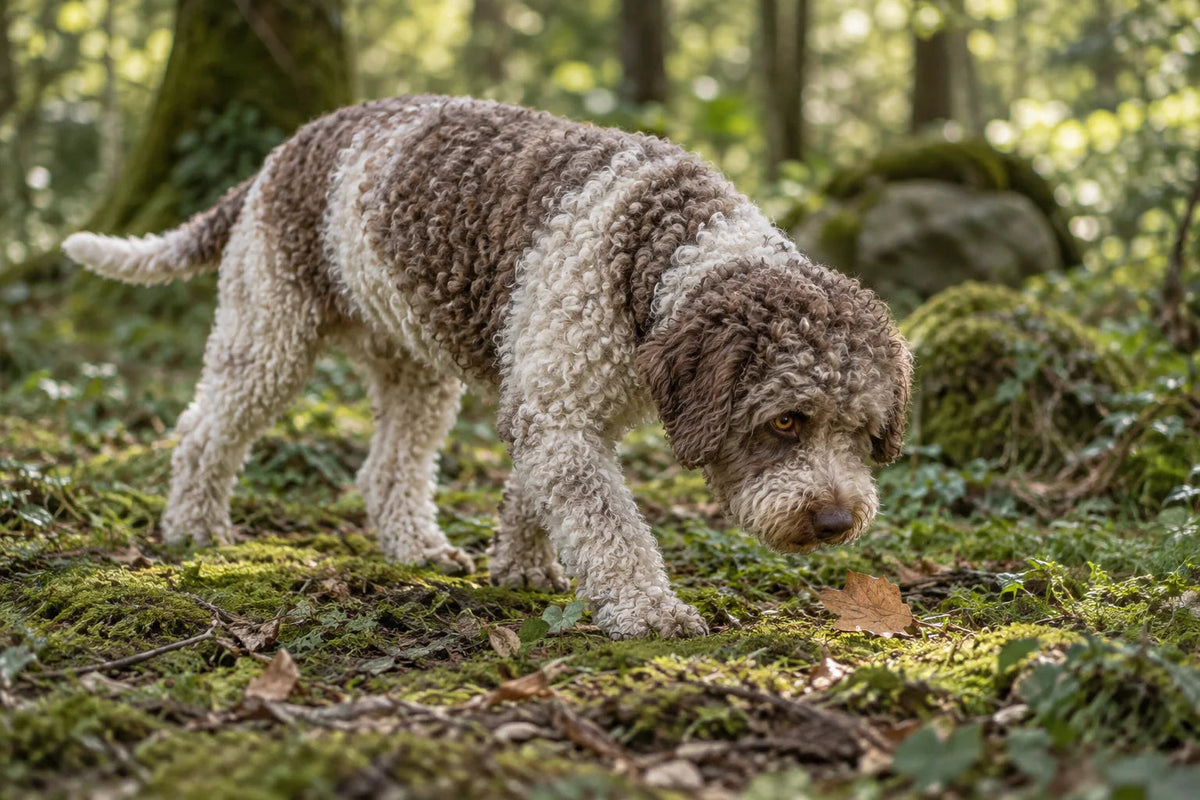
A Lagotto Romagnolo should still look like a curly, rustic working dog after grooming. The goal is not a permanently blown-out cloud of hair. It is a comfortable coat with visible curls, manageable length and no hidden felted areas.
That distinction matters when you book a haircut or start maintaining the coat yourself. A natural-looking finish still takes deliberate work; leaving the coat untouched is not the same as preserving its character.
Keep the curls; do not keep the tangles. Rustic describes the finish, not an excuse for mats. Ask for a practical Lagotto trim and a maintenance demonstration suited to your dog’s coat.
What makes the coat different?
The AKC Lagotto profile describes a dense curly coat that needs regular trimming, with some coats more prone to matting than others. A compact curl can hide hair that no longer separates near the skin.
The Lagotto breed club’s grooming guide explains that curls should remain visible and the coat should not be presented like a brushed-up Poodle or Bichon. It also recognises shorter practical trims for pets. Use that as a conversation starter with a groomer who understands the breed.
Tell a curl from a problem area
Look and feel beneath the outline. A healthy-looking curl can be gently inspected; a felted patch holds together as a dense pad and may pull at the skin when handled. Check behind the ears, collar or harness contact, armpits and the underside separately.
Do not try to make every curl look fluffy simply to prove you have brushed. Instead, ask your groomer to demonstrate how to inspect and maintain your dog’s texture between trims. Where brushing or combing is needed, work in small sections with light pressure and check that the hair separates comfortably.
If a knot is tight or the dog is uncomfortable, stop. Do not insert scissors beneath it or use a comb as a lever. A professional can decide whether the area can be cleared comfortably or needs shortening.
An after-walk check for a busy nose
A Lagotto exploring close to the ground gives you a useful reason to inspect more than the back. Look through the beard, lower legs, feet and belly for loose ordinary debris before it becomes wound into the curls.
- Beard: gently clear loose dirt and dry wet ends.
- Legs: part the curls to look for twigs and plant fragments.
- Feet: check visible spaces around the toes without digging with a tool.
- Harness contact: remove the harness after use and inspect where it has rubbed.
Deal only with debris that comes away easily. Anything embedded, painful or difficult to identify needs appropriate professional attention. Your home coat check should remain a calm grooming task, not an extraction attempt.
Give a clear haircut brief
Tell the groomer you want a Lagotto finish with visible curls and a length you can maintain. Discuss the head, ears and tail as well as the body. A practical rounded head should leave the eyes clear; long flowing ear fringes and a heavily feathered tail are not the defining aim of this breed’s usual trim.
Bring information about the coat’s condition before the appointment. If particular areas have tangled, say so. Do not insist on retaining a length that would require prolonged uncomfortable work. Agree on a return interval based on growth, activity and the amount of care you can provide.
There is no need to wait for a seasonal date if the coat is already becoming difficult. Equally, a very close all-over clip is not an automatic requirement for every pet at a particular time of year. Plan with the groomer around this dog’s condition and desired finish.
Separate clipper preparation from the final appearance
Preparing hair for a haircut and restoring a natural curly finish are different stages. Before clipping, the coat must be clean, fully dry and suitably combable. A damp, tangled coat is not made clipper-ready by calling it rustic.
For an ordinary bath, check the coat first, use dog shampoo as directed and rinse thoroughly. Blot rather than vigorously rub. Dry with comfortable moving airflow if tolerated, checking roots in dense areas. Have extensive matting assessed before wetting.
Our coat preparation guide explains the basic sequence. Ask a Lagotto-experienced groomer how they finish and maintain the curls after shaping; do not confuse keeping their natural appearance with skipping preparation.
Choose tools for the job you can safely do
A VUNRO combination comb can help inspect and finish sections that have been gently cleared. It should not be forced through a felted layer. For trained owners doing suitable body trimming, the VUNRO D-Series clipper uses D-Series blades; attachment choice must match the intended length and prepared hair.
Keep difficult mats, close work and detailed head shaping with an experienced groomer. Check nails and any dewclaws separately from the coat, introducing handling and nail tools gently. A useful maintenance routine leaves the dog comfortable to handle and the curls free to look like curls.
Keep learning
More from the Blade Blog
Whippet Grooming: Gentle Coat Care and Comfortable Nails
Read the guide →
Chihuahua Grooming: Smooth Coats, Long Coats and Tiny Paws
Read the guide →