Poodle Grooming: Curls, Coat Prep and Practical Haircuts
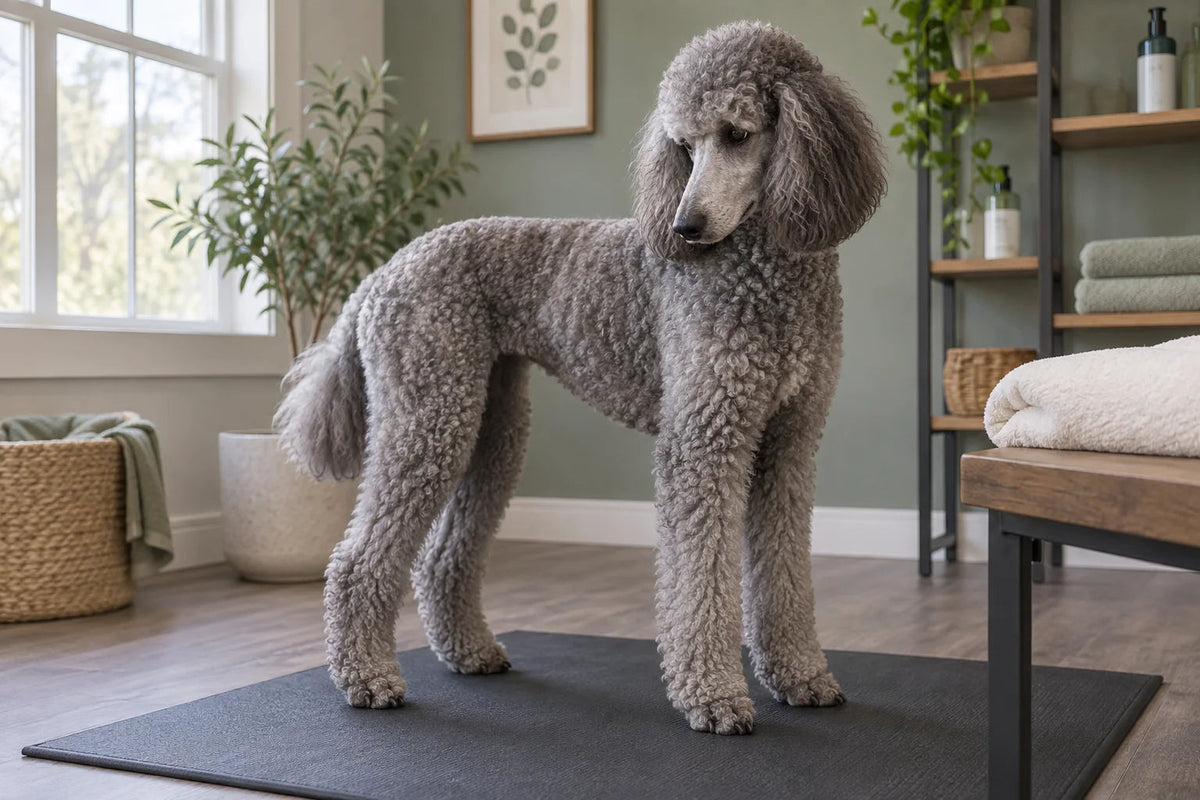
A Poodle can look beautifully brushed while still carrying a web of tangles close to the skin. The useful test is what happens beneath the curls: can you gently separate a small section and pass a comb through it without catching or pulling?
Whether your Poodle is Toy, Miniature or Standard, the goal is a comfortable, manageable coat and a grooming routine you can keep up. Size changes how you handle the dog and organise the session; it does not remove the need for regular coat care.
Your starting plan: check the coat daily, brush and comb in small sections, keep a realistic haircut appointment, and only clip a clean, fully dry, tangle-free coat. A shorter pet trim can reduce the work, but it does not make grooming optional.
Why Poodle curls need more than a surface brush
Poodles have a dense, growing coat that needs regular grooming and trimming. Loose hair can remain within the curls instead of appearing as obvious shedding around the home. Low shedding is therefore a maintenance responsibility, not a promise of a maintenance-free or allergy-safe dog. The AKC’s Poodle coat guidance stresses brushing and combing through the depth of a longer coat.
Separate the work into a simple route: one side of the body, the other side, chest, legs and tail. Check friction areas separately—behind the ears, beneath the collar or harness, around the armpits and where the legs meet the body. Those checks are easy to miss if you spend the entire session making the back look fluffy.
A brush-and-comb routine you can actually repeat
- Start somewhere stable. Use a non-slip surface at a safe height. Let your dog settle and reward calm handling. Never leave a dog unattended on a grooming table.
- Part a narrow layer. Lift the hair gently so you can see where the section starts. Use a coat-appropriate brush with light strokes, working through manageable tangles from the free ends rather than dragging from the roots.
- Check your pressure. Pins should work through hair without repeatedly scraping the same patch of skin. Ask a groomer to demonstrate if you cannot tell whether you are brushing the coat or scratching the dog.
- Follow with a comb. Check from near the roots through to the ends, keeping the teeth clear of the skin. If it catches, return to that section; do not pull harder.
- Finish before frustration. A comfortable five-minute section is more useful than a battle to complete the whole dog. Record what remains so the same areas are not repeatedly forgotten.
A suitable dog conditioning or detangling spray can help with light tangles when used as directed. It cannot turn a tight mat into a safe home brushing job. If hair feels like a firm pad or sheet, or your dog objects when it moves, stop and arrange a groomer’s assessment before bathing.
Choose a haircut that fits your week
“Teddy bear” and “puppy cut” are descriptions, not universal lengths. Take a reference photograph, explain how often you can brush, and agree the body, leg, face and ear lengths separately. Keeping very full legs with a short body still leaves substantial combing work.
The Poodle Club’s care guidance recognises both professional grooming and owners learning to groom their own dogs. If you want to learn, begin with a groomer showing you an uncomplicated pet trim on your own dog. Close work around the face, toes and sanitary areas needs specific handling skills; it should not be your first experiment.
Discuss a regular appointment interval with your groomer. Around four to six weeks is a useful initial conversation for many pet Poodles, then adjust to coat growth, chosen length and what your comb checks reveal. Book sooner if the coat becomes difficult to maintain rather than waiting for the next date regardless.
Prepare properly before the clipper starts
Assess and gently brush out manageable tangles first. Bathe with dog shampoo used according to its label, rinse thoroughly, press out moisture with towels, and dry with an approach your dog tolerates. Keep airflow comfortable and moving. Check beneath the surface: a coat can feel dry on top while remaining damp at the roots.
Finish with a gentle comb check. Clipping begins only when the coat is fully dry and the section is free of tangles. Our coat preparation guide explains the complete sequence, including why partially drying the coat is only an intermediate step.
If you have been shown how to clip safely, begin with a small test area and a conservative length. Stop if the equipment snags; do not force a blade or guard through resistance. Keep checking blade temperature and follow the equipment’s cleaning and oiling instructions. More motor power does not make an unprepared coat suitable for clipping.
Tools that earn a place in the routine
A suitable brush does the section work; a comb checks the result. The VUNRO Combination Detangling and Finishing Comb offers coarse and fine sections for checking prepared hair. Match the reach and spacing to the coat in front of you, rather than using the fine section to pull through knots.
For learned home clipping, the VUNRO D-Series Clipper is a body-clipping option. It uses D-Series blades, not A5 blades. Its included #10 blade is a close-cutting blade; it is not automatically the right finished length for your pet trim. Discuss the desired length and a compatible blade or guard setup before you start. Buy for the haircut you intend to maintain, not simply the breed name.
Small checks between full grooms
Keep food and water residue from drying into facial hair, gently check the outer ears and examine paws after walks. Do not insert tools into the ear canal or attempt scissors around a moving eye. These checks help you spot work that needs a groomer before it becomes uncomfortable.
Check nails, including any dewclaws, during a quiet weekly handling session. If you have learned safe nail care, a grinder can smooth small amounts gradually; keep long hair away from its rotating head and use brief contact. A grinder can still reach the quick. If the dog struggles or you are unsure where to stop, have a professional do the trim.
Common Poodle grooming questions
Can I leave the coat long and just brush the outside?
No. A long coat needs attention through its depth. If the comb catches near the roots, a smooth surface does not mean the section is finished. Shortening the style is a practical choice if the current length exceeds the time you can give it.
Does clipping replace brushing?
No. Shorter hair is easier to manage, but ears, legs, collars and growing curls still need checks. Keep the routine going between haircuts.
What if the clipper keeps stopping in the hair?
Stop the pass and reassess coat preparation, blade cleanliness, assembly and the selected length. Do not press harder or repeatedly work over the same place. If the coat is matted, ask a groomer to assess it; if the equipment appears faulty, contact VUNRO with a clear video of the problem.
Keep learning
More from the Blade Blog
Whippet Grooming: Gentle Coat Care and Comfortable Nails
Read the guide →
Chihuahua Grooming: Smooth Coats, Long Coats and Tiny Paws
Read the guide →